Kasana–Luweero Diocese to Hold First Annual Pilgrimage to the Birthplace of St. Athanasius Bazzekuketta
 isaacsemwanga
Saturday, May 30, 2026
Kasana–Luweero Diocese to Hold First Annual Pilgrimage to the Birthplace of St. Athanasius Bazzekuketta
By Bernard Bakalu
Luweero
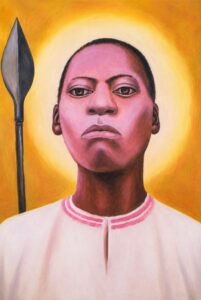
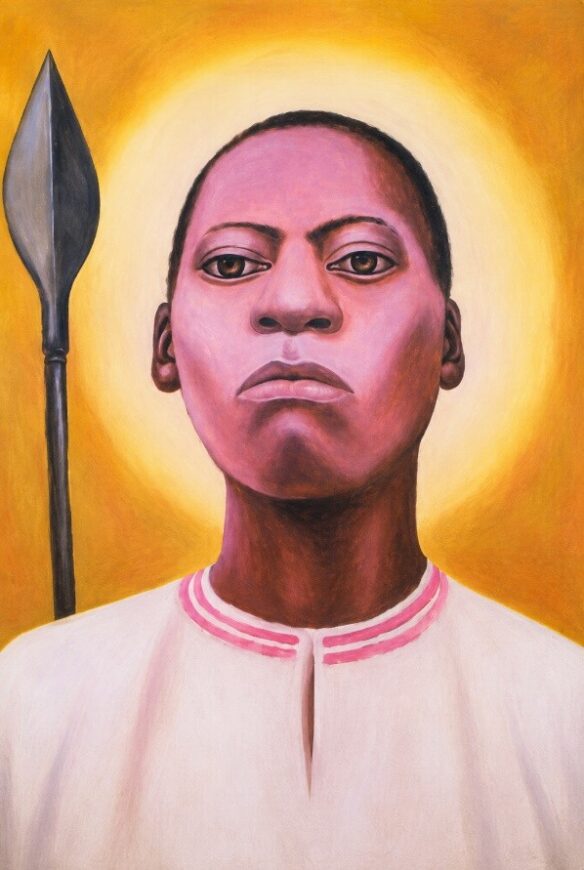
St. Athanasius Bazzekuketta.
All is set for Kasana–Luweero Diocese to hold its first annual diocesan pilgrimage to the birthplace of St. Athanasius Bazzekuketta, one of the celebrated Uganda Martyrs whose steadfast witness to Christ continues to inspire the faithful in Uganda and throughout the universal Church.
The birthplace is located at Ssempa Village in Mulajje Parish, Mulajje Deanery, a site that has increasingly become a place of prayer, remembrance, and devotion.
Following the identification of the site several years ago, the Diocese embarked on efforts to preserve and redevelop it into a significant spiritual center for pilgrims and visitors.
In May 2024, Mulajje Parish organized the first pilgrimage to the birthplace, with the intention of establishing it as an annual tradition.
However, the pilgrimage did not take place in 2025 due to a special diocesan arrangement that saw the faithful of Mulajje Parish join a pilgrimage to Kasana Cathedral.
This year, the Diocese will officially launch its annual pilgrimage to the birthplace of St. Athanasius Bazzekuketta on Sunday, May 31, 2026.
Speaking ahead of the event, Rev. Fr. Dr. Gerald Wamala, Dean of Mulajje Deanery and Parish Priest of Mary Mother of the Divine Shepherd Mulajje Parish, founded in 1914, said all preparations have been completed and pilgrims are expected to gather in large numbers for the historic occasion.
According to Fr. Wamala, the Bishop of Kasana–Luweero Diocese, Rt. Rev. Lawrence Mukasa, will lead the pilgrimage as the principal pilgrim.
The faithful will undertake a prayerful journey on foot from Mulajje Parish to Ssempa Village, covering a distance of approximately 15 kilometers.
Fr. Wamala noted that the pilgrimage is not only an opportunity to honor the memory of St. Athanasius Bazzekuketta but also a moment for spiritual renewal, prayer, and reflection on the heroic witness of the Uganda Martyrs, who chose fidelity to Christ even in the face of persecution and death.
Plans to Develop the Birthplace into a Major Pilgrimage Centre
The Diocese has also unveiled ambitious plans to transform the birthplace of St. Athanasius Bazzekuketta into a fully-fledged pilgrimage shrine and spiritual tourism destination.
The initiative follows an announcement made during the 60th Anniversary of the Canonization of the Uganda Martyrs on November 15, 2024, at Munyonyo Martyrs Shrine, where Church leaders revealed plans to develop the birthplaces of the Uganda Martyrs into spiritual tourism sites.
The initiative seeks to preserve and promote the enduring legacy of faith, courage, and sacrifice left by the martyrs, whose witness continues to strengthen the Church in Africa and beyond.
As part of this vision, Kasana–Luweero Diocese is planning the construction of a Shrine dedicated to St. Athanasius Bazzekuketta, a Memorial Community Centre, and a Primary School at his birthplace in Ssempa.
The Diocese believes that the project will not only preserve the spiritual heritage of one of Uganda’s most revered saints but will also contribute to the holistic development of the local community.
The proposed Memorial Community Centre and Primary School are expected to become centers of faith formation, education, and social transformation, especially for vulnerable children and families in the area.
St. Athanasius Bazzekuketta, who is widely recognized as the Patron Saint of Bankers, remains a powerful example of honesty, integrity, faithfulness, and selfless service.
The Diocese hopes that the shrine will inspire pilgrims, professionals, and young people to embrace these Christian virtues in their daily lives.
Once completed, the shrine is expected to attract pilgrims from across Uganda and beyond who wish to deepen their faith through prayer and reflection at the birthplace of the saint.
The site will also contribute to Uganda’s religious tourism and cultural heritage sectors by preserving an important chapter in the history of the Church.
The Diocese further envisions the shrine becoming an important stopover for pilgrims, particularly those traveling from northern Uganda to Namugongo Martyrs Shrine for the annual Uganda Martyrs Day celebrations on June 3.
Pilgrims will have an opportunity to pray, reflect, and draw inspiration from the life and witness of St. Athanasius Bazzekuketta before continuing their journey to Namugongo.
Fr. Gerald says they believe that the annual pilgrimage and the planned shrine development will strengthen devotion to the Uganda Martyrs, promote evangelization, and preserve for future generations the rich spiritual heritage that has made Uganda known throughout the world as the land of the martyrs.
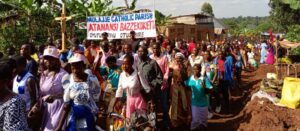
Rev. Fr. Dr. Gerald Wamala (in black cassock) joins pilgrims during the first Mulajje Parish Pilgrimage to the birthplace of St. Athanasius Bazzekuketta at Ssempa, Mulajje Parish, on Sunday, May 26, 2024.
The Life and Legacy of Saint Athanasius Bazzekuketta
Introduction
St. Athanasius Bazzekuketta was born at Ssempa village in Mulajje Parish, in Mulajje Deanery in Kasana-Luweero Diocese.
Saint Athanasius Bazzekuketta stands among the glorious company of the Uganda Martyrs, whose heroic witness became the seed of the Christian faith in Uganda and throughout Africa. Born around 1868–1870 in the Kingdom of Buganda, he offered his life for Christ on 27 May 1886 at Mengo during the persecution ordered by Kabaka Mwanga II. Through his martyrdom, Saint Athanasius joined the countless faithful servants of God who chose eternal life with Christ rather than denying the Gospel.
On 18 October 1964, Pope Paul VI canonized Saint Athanasius together with the Catholic Uganda Martyrs, presenting them to the universal Church as shining examples of holiness, fidelity, and courage. Their feast is celebrated every year on 3 June, a day on which pilgrims from across Africa and the world gather in thanksgiving to God for the witness of these heroic saints.
Saint Athanasius is remembered not only for the courage with which he embraced suffering and death, but also for his humility, purity of heart, honesty, obedience, and unwavering love for Christ. His life reflects the words of Sacred Scripture: “Be faithful unto death, and I will give you the crown of life” (Revelation 2:10). Today, he continues to inspire Christians to live holy lives marked by integrity, prayer, sacrifice, and total trust in God.
Early Life
Saint Athanasius Bazzekuketta was born during the reign of Kabaka Muteesa I, at a time when Buganda was experiencing profound political, cultural, and religious transformation. Islam had already entered the kingdom through Arab traders, while Christian missionaries from Europe were beginning to proclaim the Gospel in Buganda. In this atmosphere of change, many young people encountered the message of Christ for the first time.
Athanasius grew up in a traditional Ganda family and was known from childhood for his discipline, humility, obedience, wisdom, and calm nature. He possessed a respectful and trustworthy character that distinguished him even among his peers. These virtues prepared him for the responsibilities he would later assume in the royal palace.
The name “Bazzekuketta” is traditionally associated with careful stewardship, responsibility, accountability, and trustworthy management. For this reason, many Catholics have come to regard Saint Athanasius as a model of integrity and faithful service, especially in matters concerning leadership and the responsible use of resources entrusted to one’s care.
Even before embracing Christianity, Athanasius already displayed the natural virtues of honesty, respectfulness, and self-discipline. These qualities would later be perfected by the grace of God through his Christian faith.
Service in the Royal Palace
As a young man, Athanasius entered service at the royal palace, known as the Lubiri, during the reign of Kabaka Mwanga II. Like many young pages in the king’s court, he carried out duties that demanded obedience, discipline, courage, and loyalty. Life in the palace was often difficult, and failure to obey royal commands could result in harsh punishment.
It was during this period that Catholic missionaries known as the Missionaries of Africa intensified the preaching of the Gospel in Buganda. Through catechism, prayer, and instruction in the Christian faith, they introduced many young people to Jesus Christ and the teachings of the Catholic Church.
The message of the Gospel deeply touched Athanasius. He embraced the Catholic faith wholeheartedly and was baptized into the Church. After his conversion, he devoted himself earnestly to prayer, catechism, and the Sacramental life of the Church. He openly professed his faith in Christ and encouraged fellow Christians to remain steadfast in their commitment to God.
His Christian life became visible through his humility, honesty, purity, obedience, and charity toward others. In him, the grace of baptism bore abundant spiritual fruit.
His Christian Faith
Saint Athanasius Bazzekuketta became known for his deep spiritual life and unwavering fidelity to Christ. He regularly joined fellow believers in prayer and catechetical instruction, drawing strength from the Word of God and the fellowship of the Christian community.
His faith was not merely external or cultural; it was rooted deeply in a personal commitment to Christ. He understood that obedience to God must always come before obedience to human authority whenever earthly commands contradict divine truth. Like the Apostles who declared, “We must obey God rather than men” (Acts 5:29), Athanasius remained faithful even in the face of persecution.
At that time, Kabaka Mwanga II grew increasingly hostile toward Christians. The Kabaka feared the influence of Christianity and believed that converts were becoming more loyal to God than to the throne. Christian teaching on morality, purity, and human dignity also challenged some practices within the royal court.
As persecution intensified, many Christians were arrested, tortured, and ordered to abandon their faith. Yet Athanasius remained courageous and steadfast. He encouraged fellow believers not to lose hope but to persevere in fidelity to Christ. Despite his youth, he displayed remarkable spiritual maturity and heroic virtue.
Martyrdom
In May 1886, Kabaka Mwanga II ordered the execution of Christians who refused to renounce their faith. Athanasius Bazzekuketta was arrested together with other believers and condemned because of his loyalty to Jesus Christ.
According to tradition, Athanasius became seriously weak and ill during the journey to Namugongo, where many of the Uganda Martyrs would later suffer death by fire. Because of his condition, he was unable to continue the journey and was instead killed earlier at Mengo on 27 May 1886.
Even in suffering, Saint Athanasius remained calm, prayerful, and steadfast. He refused to deny Christ, choosing instead to surrender his life into the hands of God. Through his martyrdom, he bore witness to the truth of the Gospel and demonstrated complete trust in the promises of eternal life.
The word martyr means “witness,” and Saint Athanasius fulfilled this calling perfectly. By shedding his blood for Christ, he proclaimed that no earthly power is greater than the love of God revealed in Jesus Christ.
Canonization and Sainthood
After the deaths of the Uganda Martyrs, the Catholic Church carefully examined their lives and martyrdom and recognized in them extraordinary examples of heroic virtue and fidelity to Christ.
On 18 October 1964, Pope Paul VI canonized the Catholic Uganda Martyrs in Rome, officially declaring them saints of the universal Church. This historic event became a moment of great joy not only for Uganda but for the entire African continent.
The canonization of the Uganda Martyrs demonstrated clearly that holiness is not limited to one nation, race, or culture. It proclaimed to the world that Africa too has produced saints whose witness shine brightly within the universal Church.
Today, the memory of Saint Athanasius and his fellow martyrs is especially honored at Uganda Martyrs Catholic Shrine Namugongo, where thousands of pilgrims gather annually for prayer, thanksgiving, and spiritual renewal.
Spiritual Message and Legacy
The life of Saint Athanasius Bazzekuketta continues to offer a profound spiritual message to Christians today. His witness teaches believers to remain faithful to God in times of hardship, temptation, and persecution. He reminds Christians that true discipleship often demands sacrifice, courage, and perseverance.
Saint Athanasius also stands as a powerful example of honesty, accountability, and integrity. In a world wounded by corruption, dishonesty, greed, and abuse of authority, his life calls Christians to live truthfully and responsibly before God and society.
His courage inspires believers never to fear standing for truth and justice, even when doing so involves suffering or rejection. His example also demonstrates that holiness is possible for young people. Though he died at a young age, he attained spiritual greatness through prayer, discipline, purity, and unwavering faith.
For this reason, Saint Athanasius remains a beloved role model for Catholic youth, students, leaders, and all Christians seeking to live holy lives.
Pilgrimage and Devotion
Devotion to Saint Athanasius Bazzekuketta continues to grow throughout Uganda and beyond. Many Catholics honor him through pilgrimage, prayer, novenas, and participation in the annual Uganda Martyrs celebrations.
Places especially associated with his memory include the Ssempa Shrine and the Uganda Martyrs Catholic Shrine Namugongo. Every year on 3 June, thousands of pilgrims from Uganda, Kenya, Tanzania, Rwanda, South Sudan, and many other nations journey to Namugongo to honor the martyrs.
Many pilgrims walk long distances as an act of sacrifice, penance, and devotion. During these celebrations, the faithful participate in Holy Mass, Eucharistic adoration, confession, prayer, hymns, testimonies, and catechetical instruction. Through these acts of devotion, Christians renew their faith and draw inspiration from the witness of the martyrs.
Although Saint Athanasius left no written words, the spirit of the Uganda Martyrs is beautifully summarized in the saying:
“Better to die for faith than to deny Christ.”
These words capture the heroic faith, courage, and total surrender to God that characterized the martyrs.
Saint Athanasius Bazzekuketta as a Patron Saint
Saint Athanasius Bazzekuketta is widely honored by many Catholics in Uganda as a patron and model of honesty, accountability, integrity, and faithful stewardship. Although the Church has not officially assigned him a universal patronage over a specific profession, devotion to him has grown especially among people entrusted with leadership, administration, finance, and public responsibility.
This devotion is closely linked to the meaning traditionally associated with his name, “Bazzekuketta,” which conveys the ideas of careful management, responsibility, and trustworthy stewardship. Because of this, many believers look to him as an example of moral uprightness and faithful service.
He is especially regarded as a spiritual patron and role model for accountants, treasurers, administrators, public servants, teachers, business leaders, church workers, students, and young professionals preparing for positions of responsibility.
Catholics admire Saint Athanasius because he remained honest, disciplined, and faithful even in an environment filled with fear, pressure, and temptation. While serving in the royal court, he refused to compromise his Christian values. Instead, he chose truth, righteousness, and obedience to God above worldly security.
His witness speaks powerfully to modern society, where corruption, greed, dishonesty, and abuse of authority continue to harm communities. Saint Athanasius reminds believers that leadership is a sacred trust that must be exercised with humility, justice, honesty, and fear of God.
Many Christians seek his intercession for honesty in public service, wisdom in leadership, faithfulness in work, protection against corruption, courage to stand for truth, and strength to remain faithful under pressure.
Young people are particularly inspired by him because his life proves that sanctity is possible even in youth. Through prayer, discipline, moral purity, and fidelity to Christ, he attained holiness despite his short earthly life.
Today, devotion to Saint Athanasius Bazzekuketta continues to grow through pilgrimages, youth apostolates, catechetical teachings, and celebrations dedicated to the Uganda Martyrs. His life continues to challenge Christians everywhere to seek holiness, live honestly, and remain faithful to Christ above all things.
This article is adapted and synthesized from Catholic Church teachings, missionary archives, oral traditions, and scholarly works on the Uganda Martyrs, especially the writings of Fr. Henri Streicher, Fr. John F. Faupel, Msgr. John Mary Waliggo, and other historians of the Church in Uganda.
Ref.
African Holocaust: The Story of the Uganda Martyrs
Faupel, J. F. (2007). African holocaust: The story of the Uganda martyrs (Rev. ed.). Paulines Publications Africa.

– END –