Kasana-Luweero Diocese Charts New Pastoral Vision for 2027–2032
 isaacsemwanga
Kasana-Luweero Diocese Charts New Pastoral Vision for 2027–2032
Diocese begins strategic consultations to deepen evangelization, strengthen institutional sustainability and advance integral human development.
By BERNARD BAKALU
LUWEERO | November 16, 2026
The Catholic Diocese of Kasana–Luweero has embarked on a new chapter of pastoral renewal and institutional development, initiating consultations for its 2027-2032 Five-Year Pastoral Strategic Plan, aimed at deepening evangelization, strengthening institutional effectiveness and advancing integral human development across its communities.
The consultations, held on November 16 at the Pope John Paul II Pastoral Centre in Luweero, brought together heads of diocesan departments, including Pastoral, Education, Health, Caritas, Chancery, Treasury and Projects, to reflect on the Church’s pastoral journey, emerging challenges and priorities for the next five years.
Addressing participants, Rev. Fr. Bonifasio Senteza, Diocesan Director of Projects for Development and Investments, emphasized that strategic planning goes beyond institutional expansion to the heart of the Church’s mission: proclaiming the Gospel while promoting human dignity, social wellbeing and the integral development of every person.
Building on a Growing Pastoral and Development Mission
Fr. Senteza observed that the Diocese, which serves a population approaching one million people across Luweero, Nakaseke and Nakasongola districts, has witnessed significant pastoral and institutional growth, with its network of parishes expanding to 32.
The Diocese also has more than 160 primary schools, approximately 20 secondary schools, nearly 20 healthcare facilities and several institutions dedicated to education, formation and sustainable livelihoods. These include St. Kizito Youth Formation and Training Centre, Mulungi Omu Agricultural Research and Training Centre, Bethany Land Institute, and other tertiary institutions, collectively providing an important foundation for evangelization, education, healthcare, environmental stewardship and integral human development.
While acknowledging these achievements, Fr. Senteza cautioned that the expansion of pastoral structures must be accompanied by stronger institutional capacity, effective management and responsible stewardship of available resources.
He stressed that bringing the Church closer to the people must translate into deeper faith, stronger families, improved education and healthcare, greater opportunities for young people and a more dignified and sustainable future for communities.
He identified poverty, youth unemployment, technological transformation and limited financial resources among the emerging challenges requiring strategic foresight, innovation, entrepreneurship, prudent investment and institutional accountability.
Rooted in Faith, Committed to Integral Human Development
Drawing upon the Church’s social teaching, Fr. Senteza underscored that integral human development places the dignity of the human person at the centre of the Church’s pastoral and development mission, recognizing that authentic development must embrace every dimension of human life.
He explained that the new strategic plan should build upon the vision of the 2011 Diocesan Synod, “Let Us Grow in the Life of Christ,” while translating pastoral aspirations into coordinated, achievable and measurable actions.
This, he noted, requires aligning institutional priorities, human resources and sustainable financing with the Church’s common mission, while strengthening partnerships that empower communities and promote self-reliance.
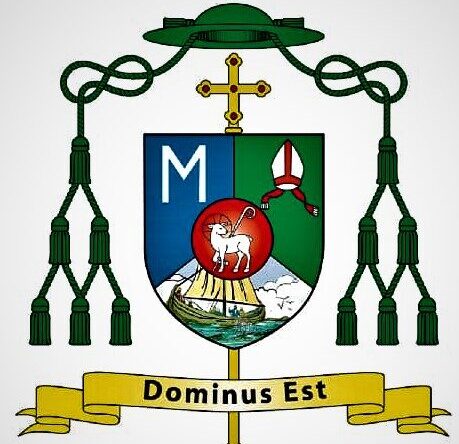
Reflecting on the episcopal motto of the Bishop of Kasana-Luweero, the Rt. Rev. Lawrence Mukasa, “It is the Lord” (John 21:7), Fr. Senteza invited participants to discern the Diocese’s future through a fundamental question:
“What is the Lord asking of our Diocese at this moment in its history?”
He emphasized that the Bishop’s pastoral vision must become a shared missionary commitment, with every parish, department, institution and member of the faithful contributing their gifts and assuming responsibility for its realization.
Turning Pastoral Vision into Lasting Impact
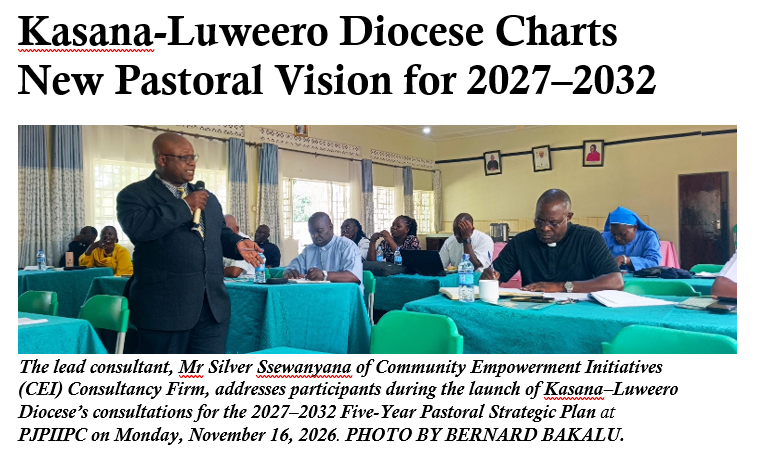
The lead consultant, Mr. Silver Ssewanyana of Community Empowerment Initiatives (CEI) Consultancy Firm, called for a coordinated planning framework that would align diocesan priorities with practical parish and departmental programmes, clearly defined responsibilities, realistic financing and measurable outcomes.
He further emphasized the importance of actionable implementation plans and regular monitoring mechanisms to ensure that the Diocese’s strategic vision translates into tangible and sustainable results.
The consultation marks the beginning of a process intended to strengthen collaboration among clergy, religious, lay faithful, development partners and the wider community in shaping the Diocese’s pastoral and development priorities.
As Kasana-Luweero looks towards 2032, the emerging vision is not simply to expand Church structures, but to deepen the impact of its mission: nurturing faith, strengthening families, upholding human dignity, empowering communities and fostering development that leaves no one behind.
Guided by the conviction “It is the Lord,” the Diocese seeks to build a future in which the proclamation of the Gospel and the integral development of God’s people remain inseparable.
— END —